For your health · Fürstenzell near Passau
Tai chi and qigong: grow strong, calmly
Everyday life is fast and often demanding. Stress, tension and tiredness are constant companions for many people. Tai chi offers a counterweight: slow, flowing movements and mindful breathing. It’s good for the body and brings the mind to rest.
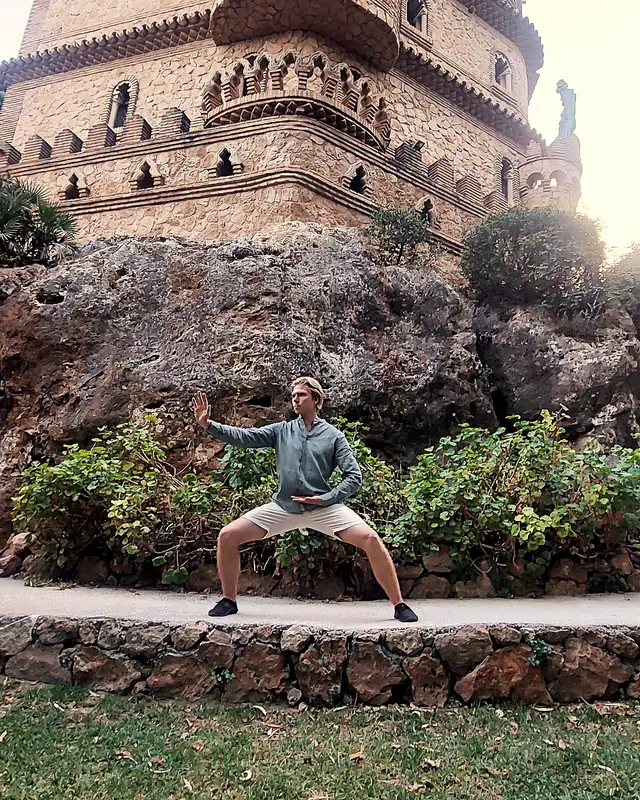
Firm stance, calm breath: practising outdoors
What regular practice can do
Good for body and mind
Traditional tai chi is suitable for every age and fitness level. It isn’t a competitive sport but a mindful path to greater wellbeing.
Ease tension
In tai chi you learn to let go of what you don’t need. Shoulders and neck relax.
Strengthen legs and back
Low stances build deep muscle strength, so your body carries you well in daily life.
Improve balance
You stand grounded on both feet again. That’s worth a lot, especially as the years go by.
Keep joints mobile
The many circling movements stretch the muscles and gently move every joint.
Stimulate circulation
Movement and breath in harmony gently get your circulation going.
Find calm and clarity
When you focus fully on the movement, you leave the day behind.
Wednesday and Friday, 7:00 to 8:30 pm
Traditional Chen tai chi
Chen tai chi is one of the oldest styles of tai chi. It combines soft, flowing movements with sudden, explosive releases of power (fajin) and lives from the interplay of yin and yang: soft and hard, tension and relaxation, opening and closing. It’s practised in forms, fixed sequences of movements.
How the training builds up:
- Spiral power exercises and the 18-step form as the foundation, enough as a daily practice for some
- Laojia Yilu (old frame) and later Laojia Erlu (cannon fist)
- the new frame forms (xinjia) for very advanced students
- usually the 18-step sword form as the first weapon form
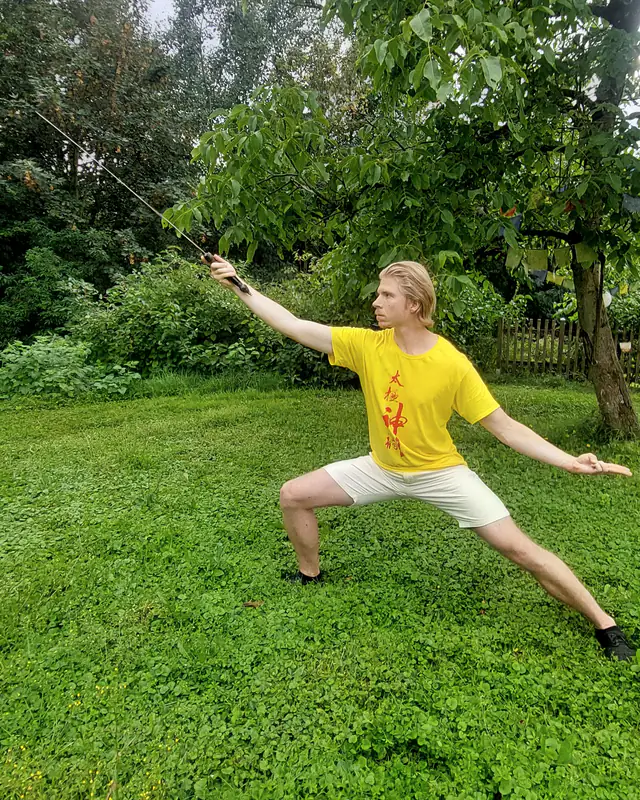
The 18-step sword form: usually the first weapon form
Wednesday and Friday, 6:30 to 7:00 pm
Qigong: breath and movement
Originally, qigong meant exercises that link movement with the breath. Today the word covers many practices that work with the body and with qi, the life energy of Chinese medicine.
In our classes, qigong is mainly about releasing unnecessary tension (song), building an open, supporting posture (peng) and strengthening your rootedness to the ground. It complements tai chi well and is also valuable for martial arts.
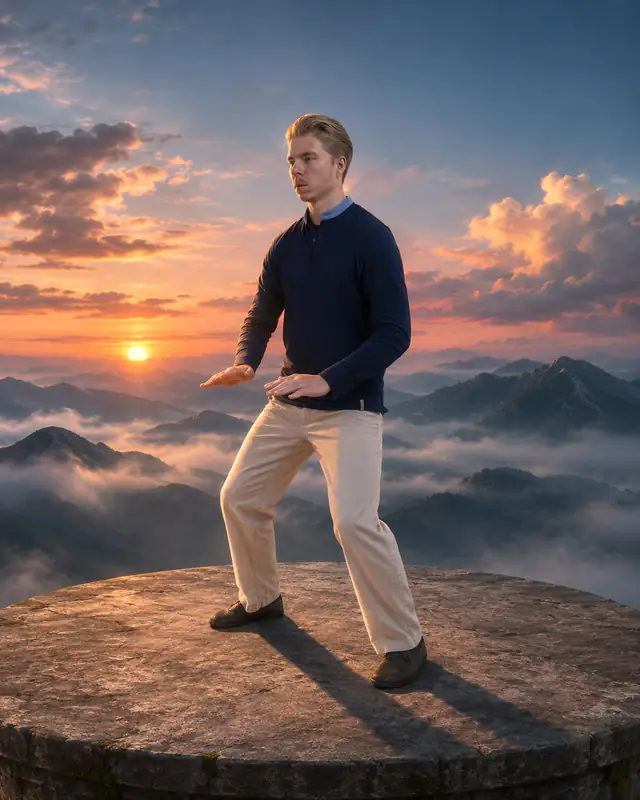
Stand relaxed, breathe calmly, stay rooted
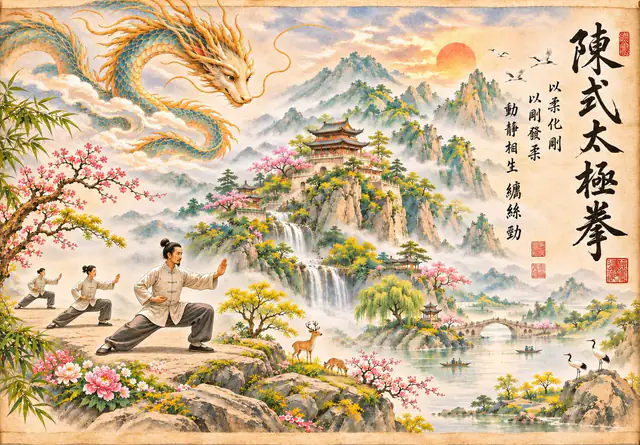
History
A general and his legacy
The Chen style goes back to Chen Wangting, a respected general of the Ming dynasty. After the dynasty fell in 1644 he lost all his titles, turned to Daoist teachings and developed his own system from martial arts, Chinese medicine and Daoist alchemy.
For centuries the Chen family passed on its knowledge in the village of Chenjiagou. Today people all over the world learn it, including here in Fürstenzell.
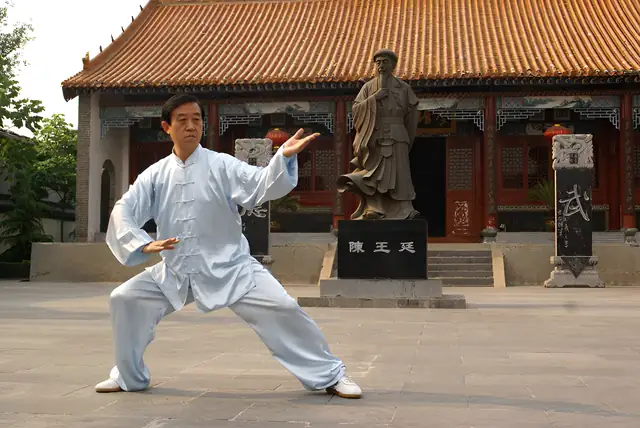
Grandmaster Chen Zhenglei in front of the statue of Chen Wangting
Good to know
Questions about tai chi and health
Tai chi is no substitute for medical treatment. If you have health problems, talk to your doctor before you start.
Is tai chi suitable for older people?
Yes. The movements can be practised higher and more slowly, so tai chi still suits you at 70. We adapt the depth and pace, and nobody has to keep up.
I have knee or back problems. Can I still join in?
Often yes, but check with your doctor first. Let us know at your trial class and we’ll practise in a higher, more careful stance.
Do I have to be interested in martial arts?
No. If you only want to practise tai chi for your health, start with the traditional tai chi and qigong classes.
How soon will I notice a difference?
That’s different for everyone. Regular practice matters more than speed: once a week in class and a few minutes at home.
Just give it a try. Your first class is free.
The best way to start is with qigong and tai chi, on Wednesdays or Fridays from 6:30 pm.